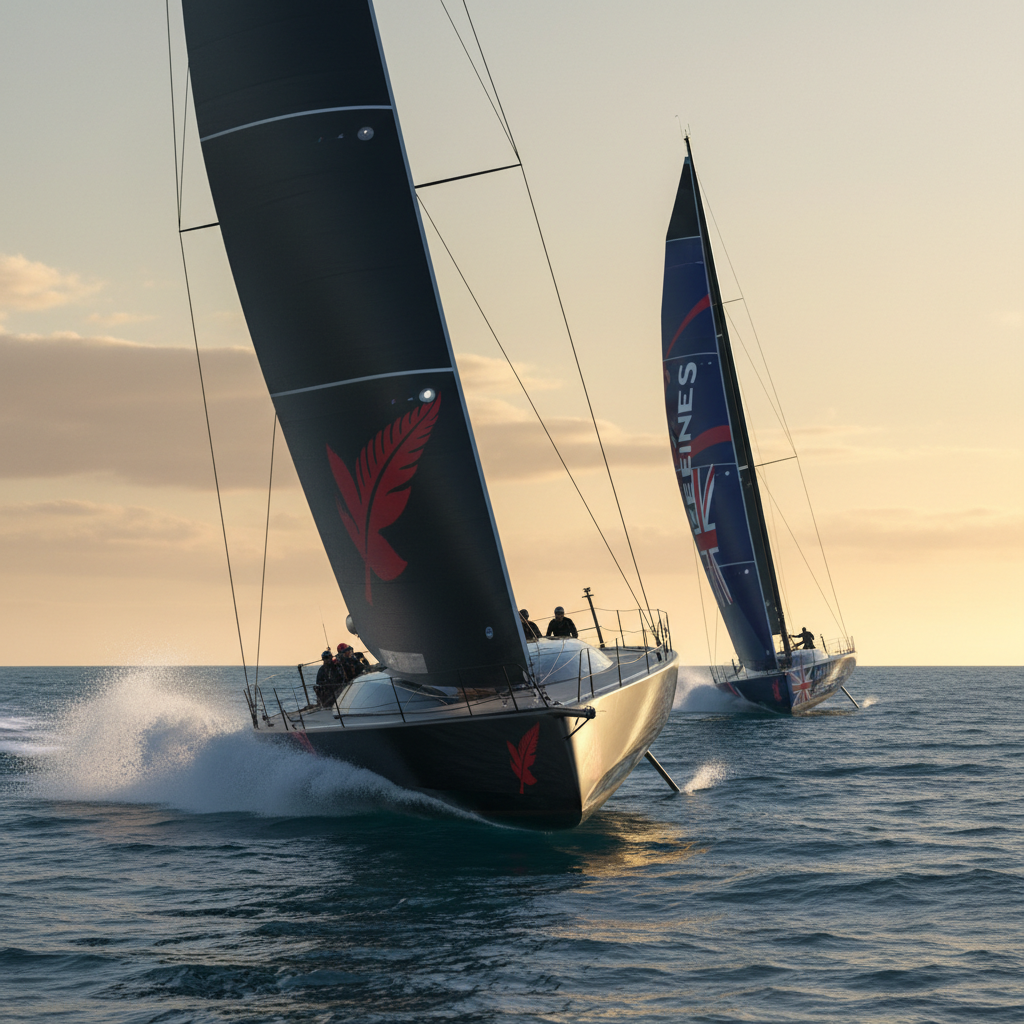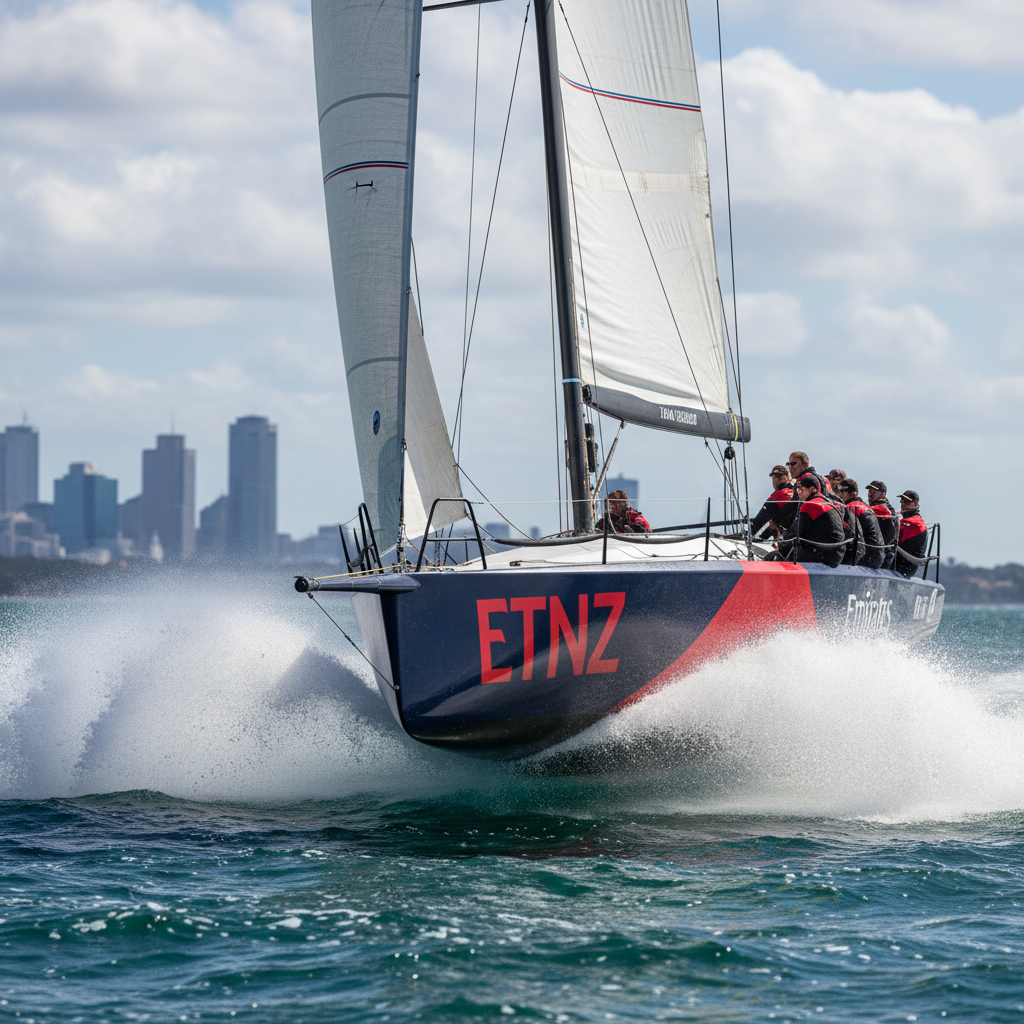
Auckland's Hauraki Gulf is once again humming with the distinct whine of foils, as Emirates Team New Zealand (ETNZ) continues its rigorous AC75 development. Monday marked the fifth sailing day for the Defender, a crucial session conducted in a building sea breeze off the East Coast Bays – precisely the conditions that will define the 37th America's Cup.
Sources from the recon diary indicate Peter Burling and the Kiwi afterguard were pushing their AC75 hard, undoubtedly gathering invaluable data on everything from foil trim to wing-sail efficiency in the fresh conditions. These early sea trials are less about outright speed and more about systems integration, structural integrity under load, and refining the complex flight control algorithms that dictate these 50-knot beasts. Every tack, every gybe, every minute spent airborne is a treasure trove of information for their North Sails designers and Southern Spars engineers.
Meanwhile, across the globe, the British challenge, INEOS Britannia, made a significant splash with the first sailing day of not one, but two AC40s from their Cagliari base. While the AC40s are smaller, one-design vessels, their deployment signals a clear strategic intent. Ben Ainslie's syndicate is likely leveraging these platforms for intensive crew training, particularly in double-up scenarios, and for rapid-fire component testing before committing innovations to their full-scale AC75. This dual-boat approach allows for direct comparison and accelerated learning, a tactic that could prove pivotal in the tight timeline leading up to Barcelona. The gauntlet, it seems, has truly been thrown.