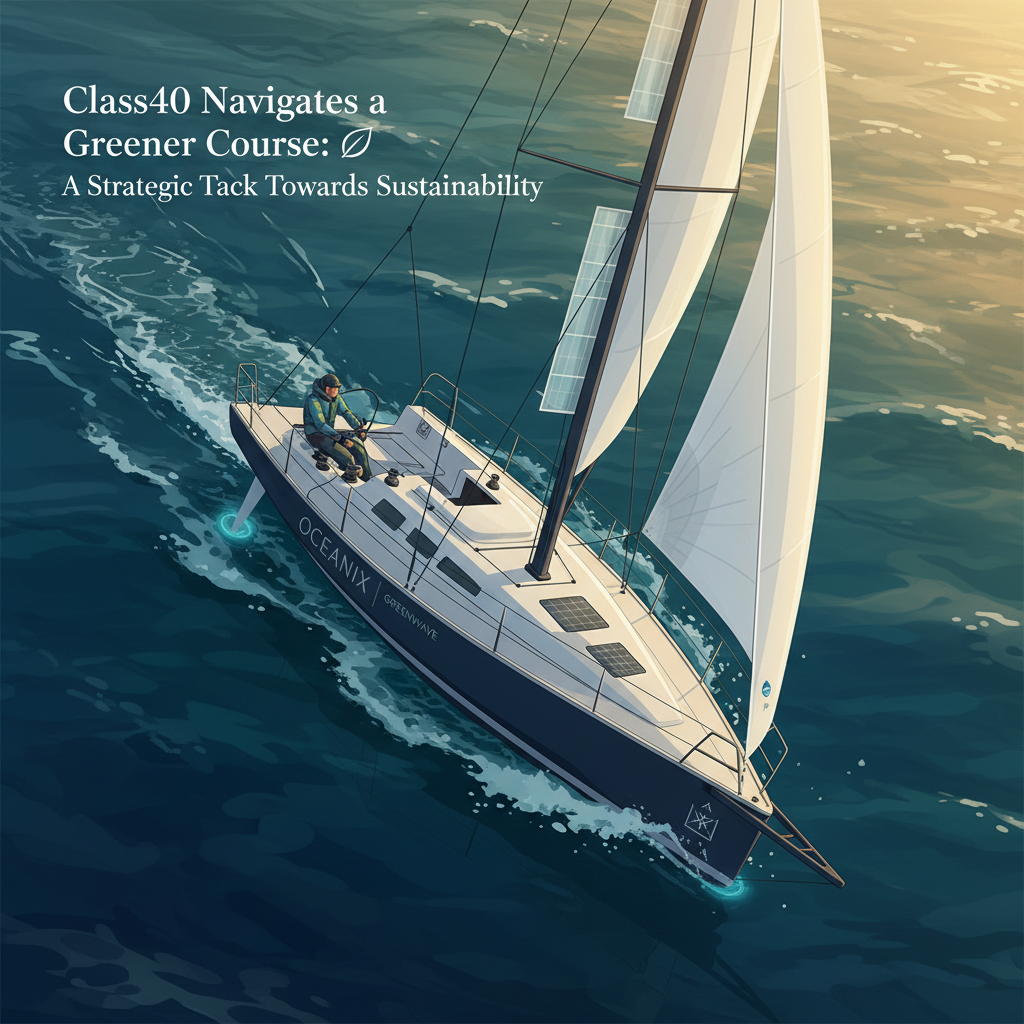
In an era where the pursuit of speed often overshadows environmental impact, the Class40 Association has quietly but effectively tacked towards sustainability. Their latest report, revealing a 6.26% reduction in CO2e emissions over two years, bringing their 2025 footprint to 1,780 tonnes, isn't just a feel-good statistic; it's a strategic move that resonates deeply within the broader sailing industry.
For a class celebrated for its accessible, high-performance offshore racing, this commitment aligns with the Paris Agreement's objectives and, more importantly, with the evolving expectations of sponsors, fans, and the next generation of sailors. This isn't merely about offsetting; it's about fundamental shifts in logistics, materials sourcing, and operational practices – areas where the grand prix circuits, from SailGP to the America's Cup, are also under increasing scrutiny.
While the America's Cup campaigns grapple with the colossal energy demands of their foiling AC75s and extensive support infrastructure, Class40's focused effort on its supply chain and event management offers a scalable blueprint. It forces a conversation about the entire ecosystem: from the carbon footprint of Southern Spars' mast production to the energy consumption of Harken's manufacturing processes. This reduction isn't just good PR; it's a competitive advantage in the long run, attracting environmentally conscious partners and ensuring the longevity of the class in a world increasingly demanding accountability. The Class40 is showing that even at speed, you can still sail a cleaner line.