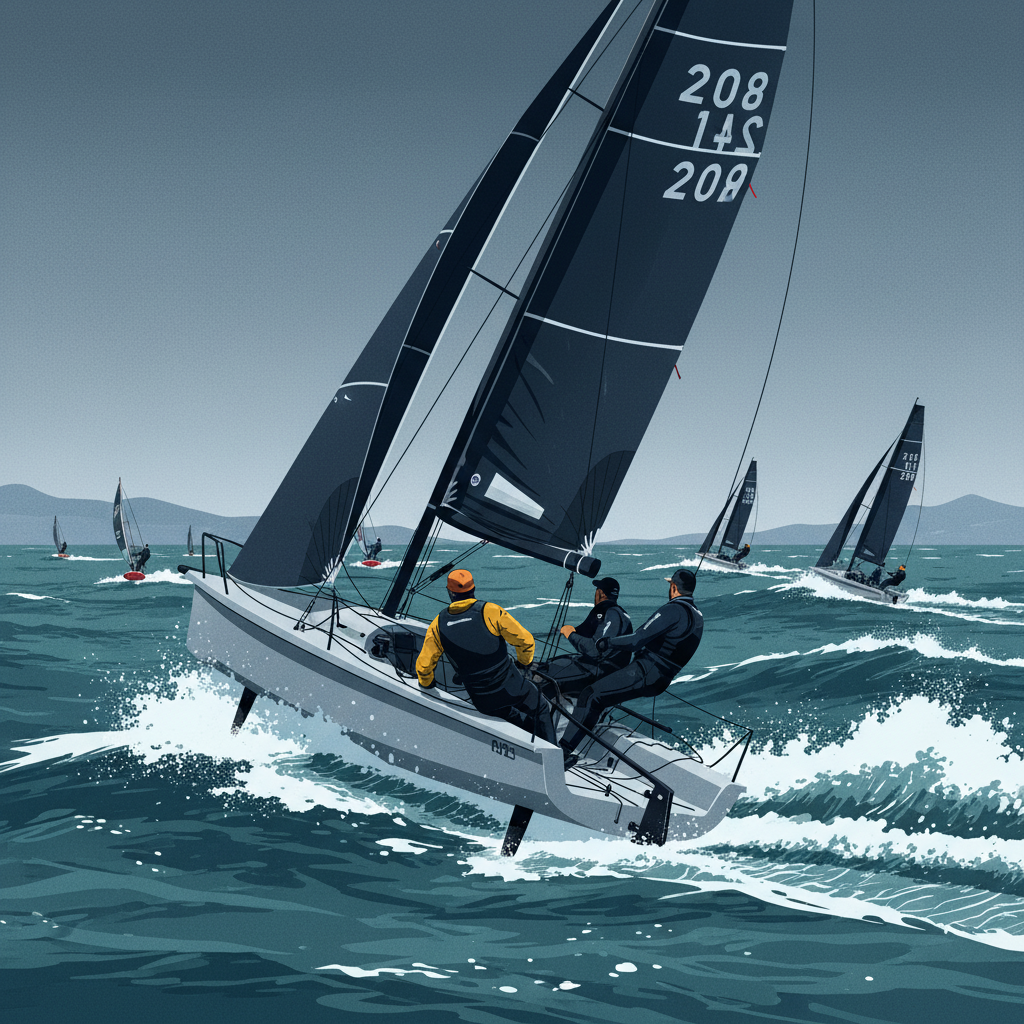
The Olympic dinghy circuit, often overshadowed by the high-octane drama of SailGP or the stratospheric budgets of the America's Cup, remains the crucible where future legends are forged. And right now, the 470 class is burning bright.
Fresh off a demanding European Championship that tested both boat handling and strategic prowess in the often-fickle breezes of Marseille, the 470 fleet is making the swift transition to Palma de Mallorca. This isn't just another regatta; it's the 55th edition of the Trofeo Princesa Sofía Mallorca by FERGUS Hotels, a cornerstone event on the Olympic calendar and the first 'Sailing Grand Slam' event of the 2026 season. For these athletes, many of whom are eyeing the ultimate prize in two years' time, every race, every tactical decision, and every point earned or lost carries significant weight.
The shift from the potentially shifty, often blustery conditions of the French coast to the more consistent, yet still challenging, thermal breezes of Palma demands a rapid recalibration. Crews will be pouring over weather models, scrutinizing tidal gates – though less impactful here than in, say, a Solent-based regatta – and fine-tuning their Harken systems and North Sails inventories for optimal performance. The mental fortitude required to transition seamlessly from one high-stakes event to another, often with minimal downtime, is a hallmark of Olympic-level sailing.
While the grand prix circuits showcase the cutting edge of foiling and wing-sail technology, the 470 remains a masterclass in classic monohull sailing: pure boat speed, flawless crew work, and an almost telepathic understanding of wind shifts. Keep a close eye on the established pairings, but also the dark horses emerging from the pack. Palma will undoubtedly provide an early, yet telling, indicator of who has done their homework and who is truly ready to contend for Olympic glory.