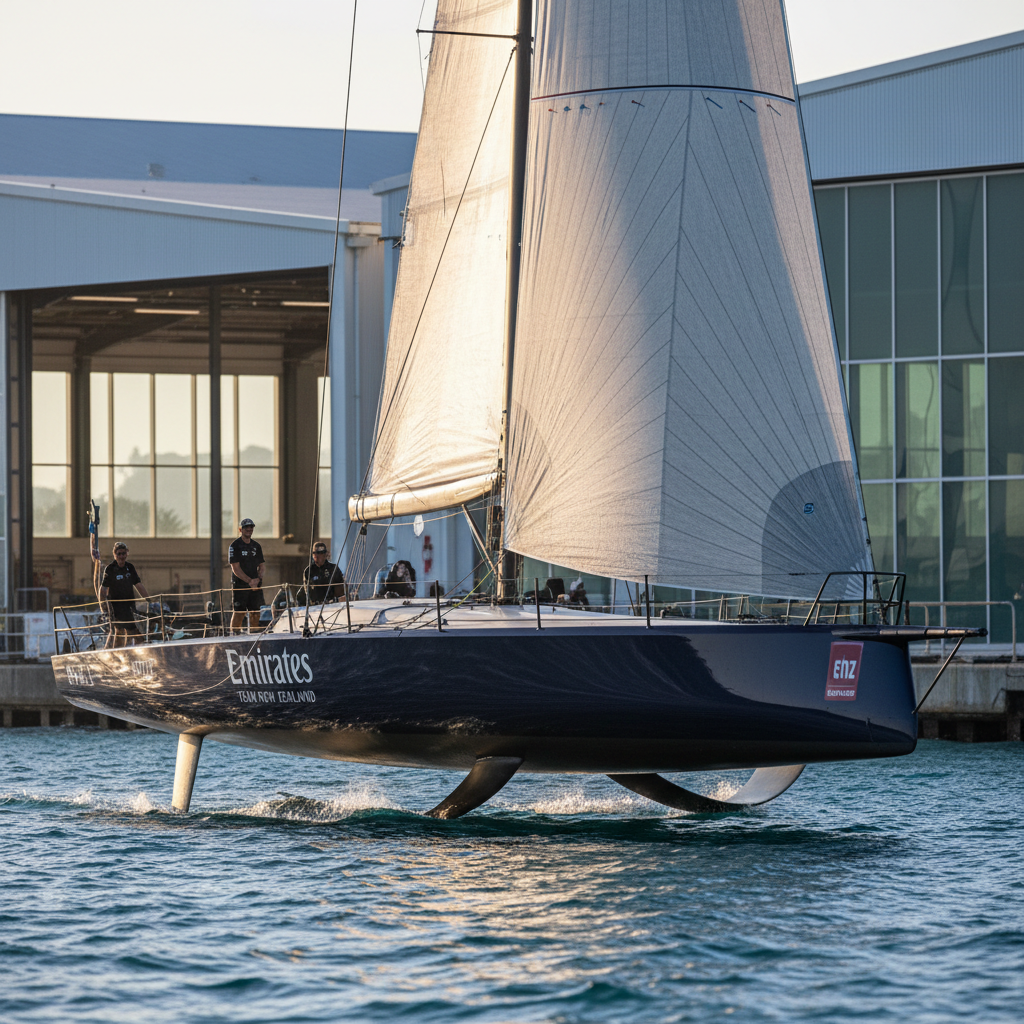
The docks at Wynyard Point buzzed with a familiar energy this week as Emirates Team New Zealand rolled out 'Taihoro,' their victorious AC75 from the 36th America's Cup. But this wasn't just a nostalgic glance; it was a peek into the future of the Auld Mug, one defined by less human power and more technological ingenuity.
With the 37th America's Cup mandating a crew reduction from eight to a mere five sailors – a stark contrast to the original eleven when these foiling monsters debuted – the challenge for all syndicates reusing their existing hulls is immense. Taihoro's refit is the first tangible evidence of how teams will tackle this. While the fundamental hull shape remains, the internal architecture and deck layout must be completely re-engineered. Think about the implications: fewer bodies mean less weight, but also significantly less muscle for grinding hydraulic systems. This demands a complete overhaul of power generation, likely pushing the boundaries of battery technology and sophisticated electronic control systems, perhaps even more reliance on the cyclor concept we saw in the 35th Cup, albeit in a more refined, less human-powered guise.
This move underscores the America's Cup's relentless drive towards efficiency and innovation. It's not just about who can build the fastest boat, but who can most effectively integrate human and machine within increasingly stringent parameters. The modifications to Taihoro will be closely scrutinized by INEOS Britannia, Luna Rossa, and American Magic as they prepare their own existing platforms for the leaner, faster future of the Cup.