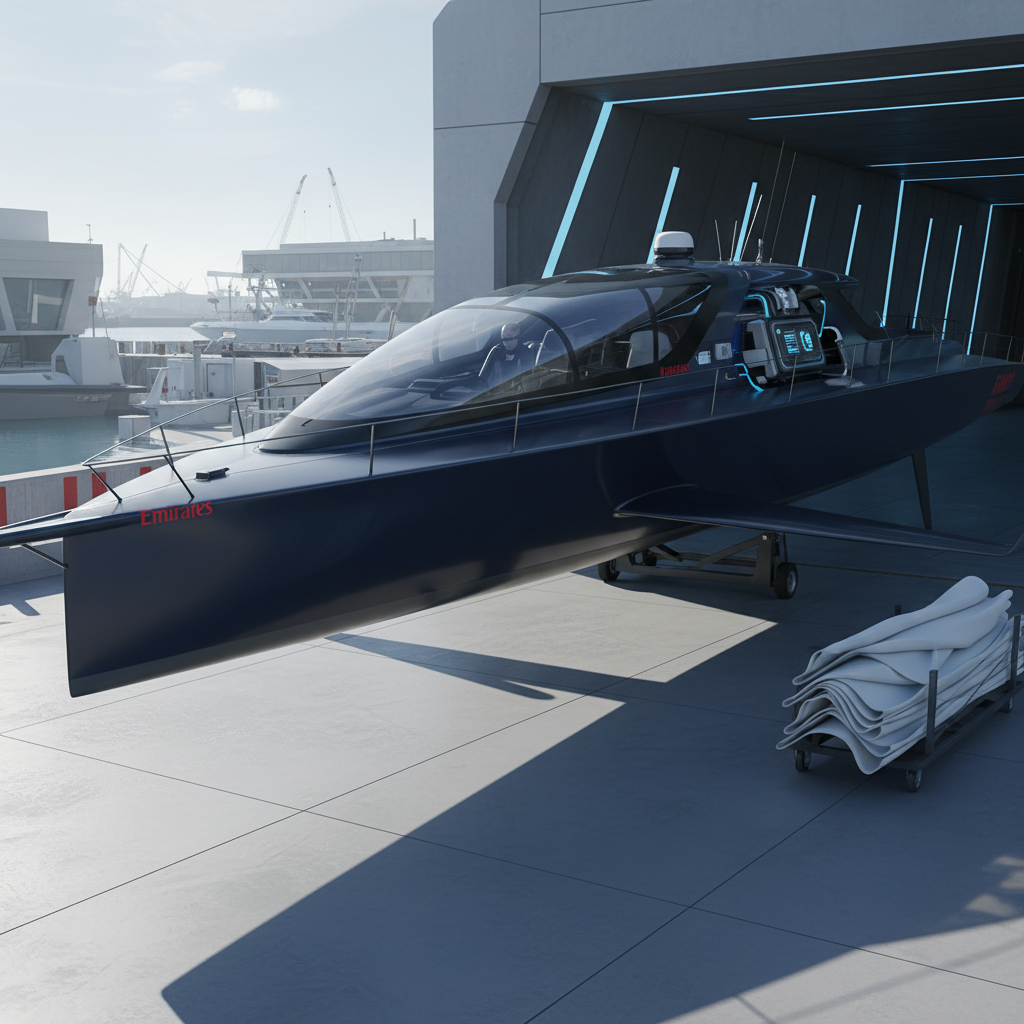
The whispers from Auckland's Wynyard Point have finally materialized into a tangible statement: Emirates Team New Zealand has relaunched their 36th America's Cup-winning AC75, Taihoro, revealing the first glimpse of what the next generation of Cup racing will look like. This isn't just a fresh coat of paint; it's a profound re-engineering, necessitated by the dramatic shift from eleven crew to a mere five.
The decision to reuse the existing AC75 hulls for the 37th America's Cup was always going to present fascinating design and engineering challenges. Taihoro, a vessel that once hummed with the coordinated power of nearly a dozen athletes, must now achieve similar, if not greater, performance with less than half that manpower. The immediate implication is a complete overhaul of the hydraulic and control systems. Expect to see further integration of automation, advanced Harken hydraulics, and potentially even more sophisticated electronic controls to manage the wing sail and foils with fewer hands.
This reduction isn't merely about weight savings; it's a fundamental change to the tactical dynamic. With only five sailors, the roles become hyper-specialized and the communication even more critical. The grinders, once the engine room, will be replaced by cyclors or electric-assist systems, freeing up precious weight and space. The afterguard – helmsman, flight controller, and tactician – will likely be even more isolated, relying heavily on data and predictive analytics. Peter Burling and Nathan Outteridge, or whoever helms for ETNZ, will be operating a more automated, yet arguably more demanding, machine. This evolution underscores the relentless pursuit of efficiency that defines the America's Cup, pushing the boundaries of technology and human capability.